
Nobuyo Oyama
Doraemon (voice)
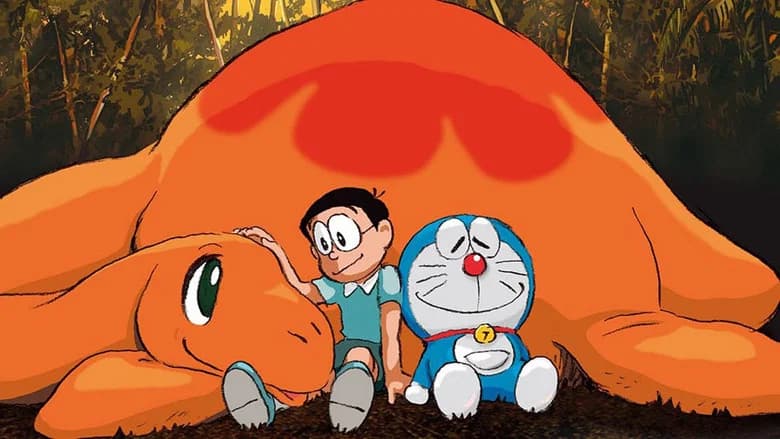
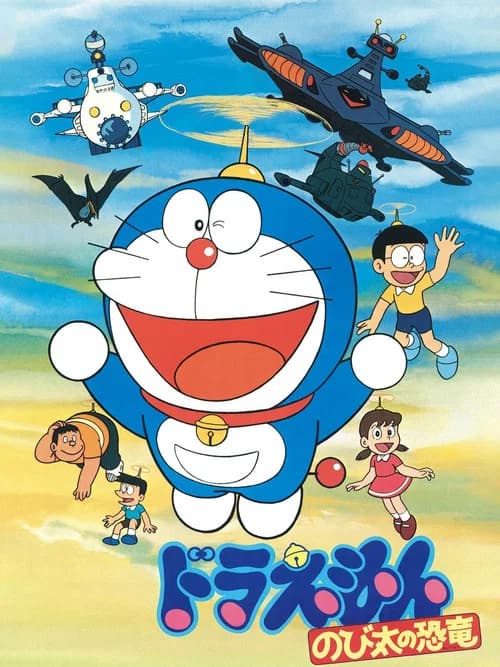
“Doraemon: Nobita's Dinosaur (1980) is a 1980s Japanese family time-travel adventure that frames a child's quest around a found dinosaur egg. It stages a compact moral engine—caretaking, communal responsibility, and youthful courage—through wide-anamorphic composition, saturated color, and steady pacing that privilege legibility over spectacle. The film affirms the cultural value of small-scale empathy and childhood agency by converting speculative mechanics into accessible ethical practice.”

This film invites viewers into a colorful, imaginative world where a child's discovery of a dinosaur fosters themes of care and growth. The narrative unfolds through a thoughtful quest, prioritizing emotional connections over sensationalism. Ideal for families seeking gentle lessons wrapped in adventure.

Kazuyo Aoki
Gian's Mother (voice)
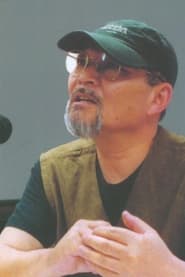
Hiroshi Fukutomi
Director
Tsutomu Shibayama
Layout

Akitaro Daichi
Compositing Artist
Toshihiko Ando
Assistant Director
Seiji Matsuoka
Screenplay

Fujiko F. Fujio
Screenplay
Soichi Besshi
Producer
Sankichiro Kusube
Producer
Haruo Sakuma
Production Manager
Shoei Tsukada
Production Assistant
Katsuji Misawa
Director of Photography
Akihiko Takahashi
Compositing Artist
Nobuo Koyama
Compositing Artist
Hitoshi Kaneko
Compositing Artist
Kazuo Inoue
Editor
Seiji Morita
Editor
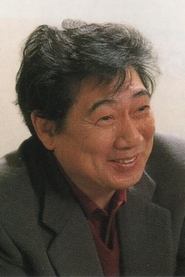
Shunsuke Kikuchi
Original Music Composer

Kumiko Ohsugi
Songs

Nobuyo Oyama
Theme Song Performance
Shōhei Kawamoto
Art Direction
Junji Kasahara
Background Designer
Masamichi Takano
Background Designer
Yumiko Saito
Background Designer
Mitsuru Kashiwara
Sound Effects
Tsugio Nakatogawa
Sound Mixer
Nobuyo Oyama
Theme Song Performance
Akira Ookuma
Sound Director
Etsuko Iiguchi
Key Animation
Shinichi Suzuki
Key Animation

Minoru Maeda
Key Animation
Sadayoshi Tominaga
Key Animation
After bringing a fossilized egg back to life with the Time Cloth, Nobita finds himself the owner of a baby dinosaur. Everything is fine until it grows up. Nobita and friends use Doraemon's time machine to return it back to its own time.
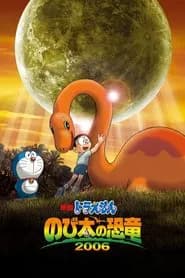
After bringing a fossilized egg back to life with the Time Cloth, Nobita finds himself the owner of a baby dinosaur. Everything is fine until it grows up. Nobita and friends use Doraemon's time machine to return it back to its own time.
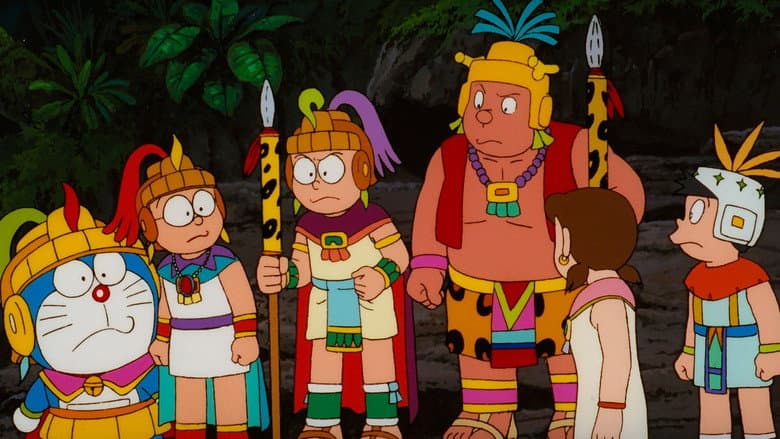
Doraemon and its friends open a hole in the time and they're travel to the Country of Mayana, a lost Mayan civilization in the jungle.
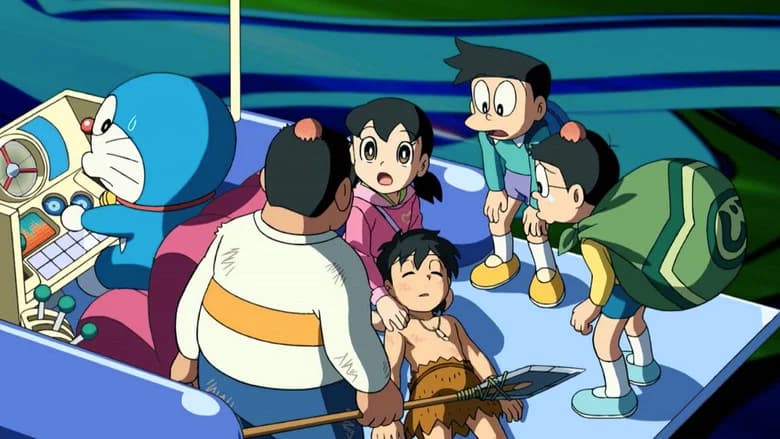
Doraemon and his friends travel to ancient Japan where they meet Kukuru. When Kukuru tells them that his tribe has been enslaved by Gigazombie, Doraemon decides to help him.
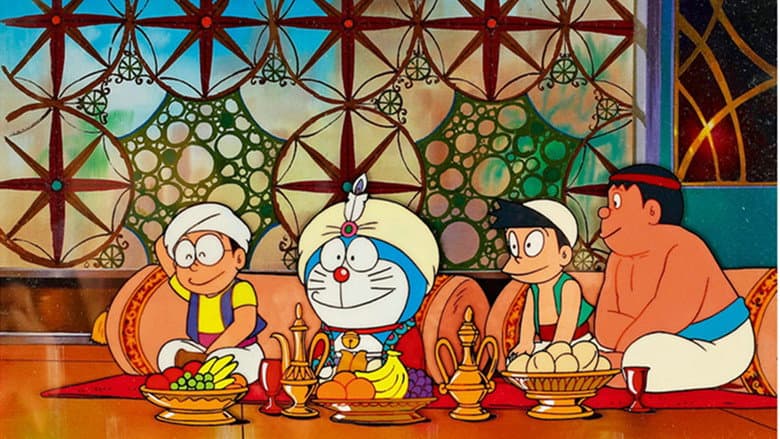
Shizuka ends up in the fantasy world of the 'Arabian Nights' story. However, Doraemon, Nobita, Suneo, and Jyaian must find her from the imaginary Middle East and bring her back to the real life.
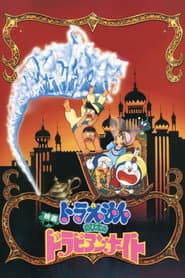
Shizuka ends up in the fantasy world of the 'Arabian Nights' story. However, Doraemon, Nobita, Suneo, and Jyaian must find her from the imaginary Middle East and bring her back to the real life.
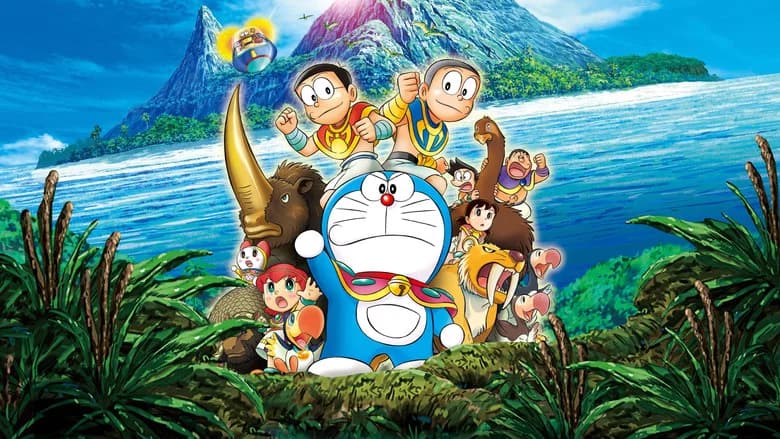
Nobita and Doraemon use time tree Mochi and catch a big bird, which has been extinct for 500 years ago. To protect the animal, Nobita and Doraemon go to Beremon Island, overseen by a golden beetle named Herakles.
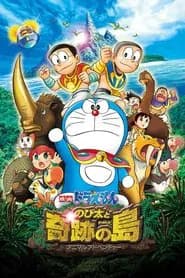
Nobita and Doraemon use time tree Mochi and catch a big bird, which has been extinct for 500 years ago. To protect the animal, Nobita and Doraemon go to Beremon Island, overseen by a golden beetle named Herakles.
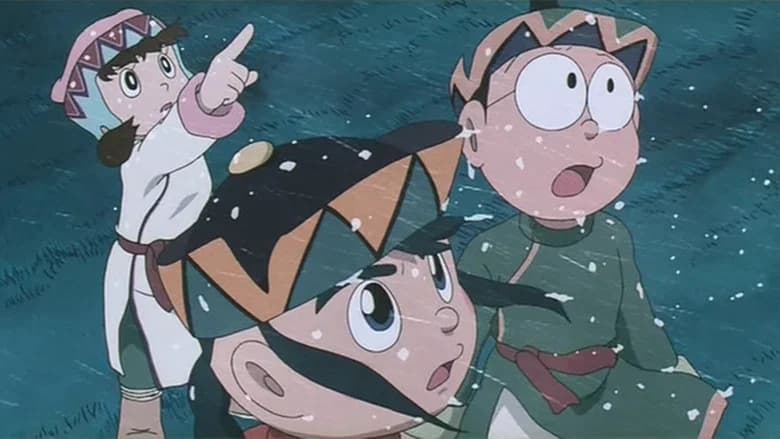
After a typhoon hits Nobita's town, he and Doraemon discover a wind sprite who, with some help from Doraemon's 22nd-century tech, takes them and their friends to a fantastic world of wind and storm people. But the wind sprite, named Fuuko by Nobita, had brought them to her world for a reason, as her peoples' gods are battling, and Suneo might be a key player in their feud.
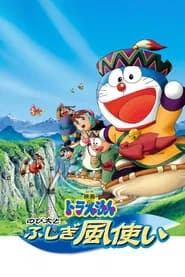
After a typhoon hits Nobita's town, he and Doraemon discover a wind sprite who, with some help from Doraemon's 22nd-century tech, takes them and their friends to a fantastic world of wind and storm people. But the wind sprite, named Fuuko by Nobita, had brought them to her world for a reason, as her peoples' gods are battling, and Suneo might be a key player in their feud.
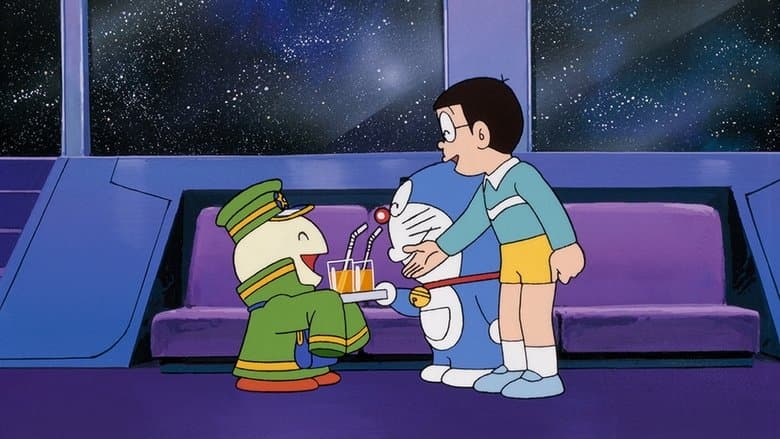
Doraemon went missing for 3 days. But it turns out later that he went to the 22nd century to buy a mystery galactic express train ticket whose destination is a secret until the passengers arrive there and see for themselves.
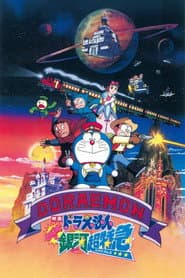
Doraemon went missing for 3 days. But it turns out later that he went to the 22nd century to buy a mystery galactic express train ticket whose destination is a secret until the passengers arrive there and see for themselves.
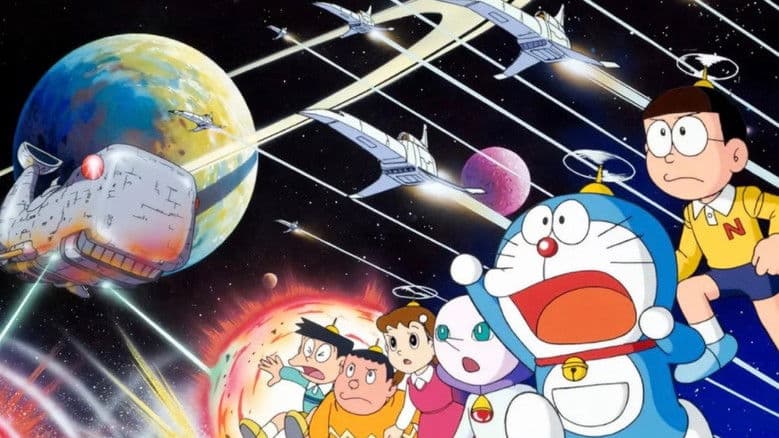
As Nobita, Gian, Shizuka, and Suneo are making their own space movie, a fleeing bug-sized alien president makes his way to Earth, and needs the help of the kids and Doraemon to stop an oppressive dictatorship threatening his democracy.
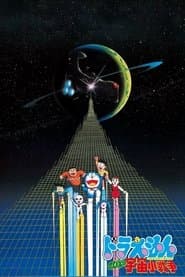
As Nobita, Gian, Shizuka, and Suneo are making their own space movie, a fleeing bug-sized alien president makes his way to Earth, and needs the help of the kids and Doraemon to stop an oppressive dictatorship threatening his democracy.
 JUST OUT
 JUST OUT
 JUST OUT
 JUST OUT
 FRESH
FRESH FRESH
FRESH FRESH
FRESH